Michigan Bucket List: Eben Ice Caves

Lindsay Knake
| 4 min read

Each winter, Michigan's Upper Peninsula is home to chambers of ice.
The Eben Ice Caves, also known as the Rock River Canyon Ice Caves, hide within the woods of Michigan’s Hiawatha National Forest near the small town of Eben Junction, about 22 miles southwest of Munising. They are a unique Upper Peninsula treasure that attract visitors from all over for winter hiking and exploration.
Learn more about these caves and how you can prepare for a hike to see them.
Eben Ice Caves
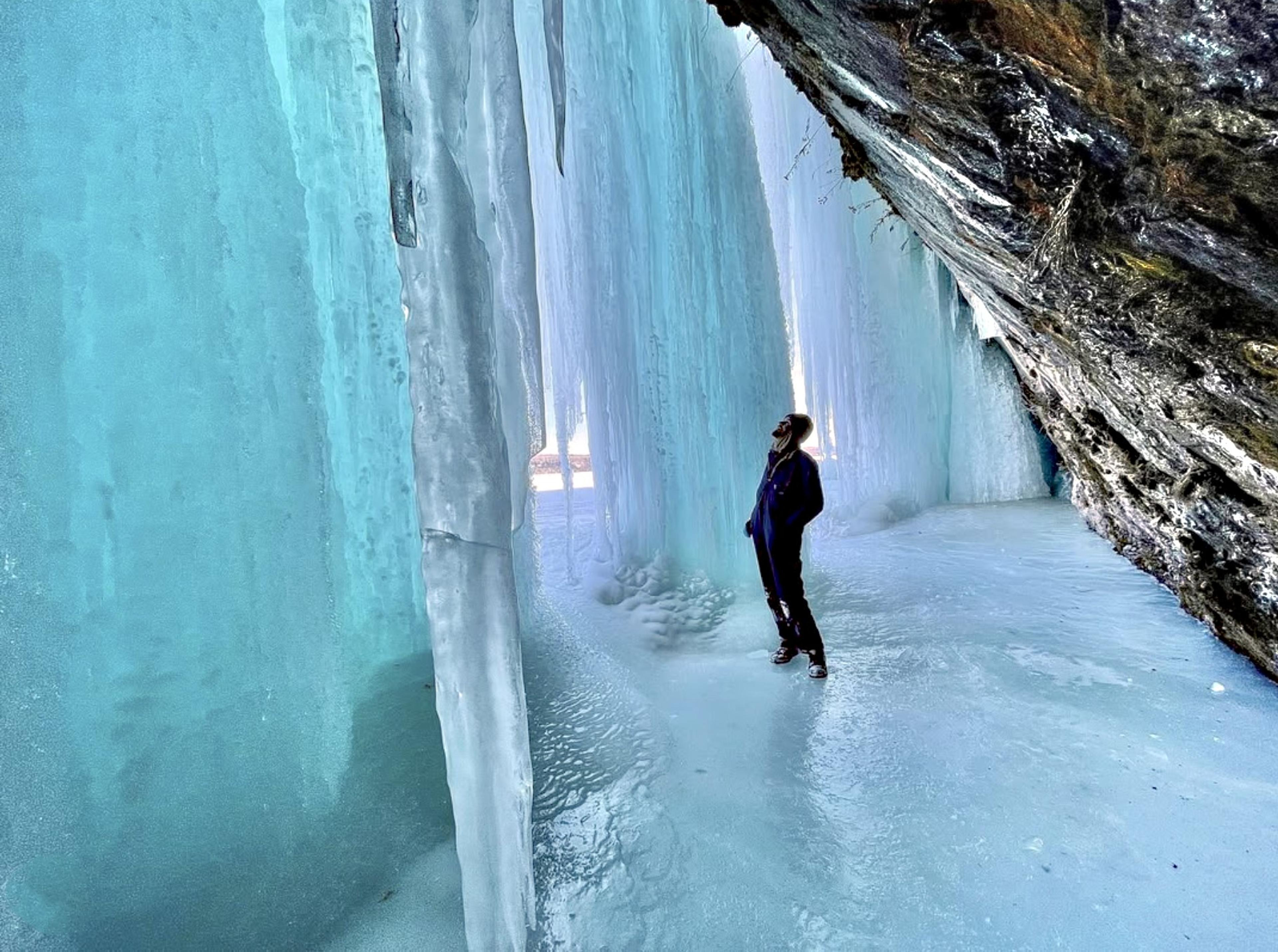
The caves are formed from snow that has melted over the edge of a small sandstone cliff. When the snow freezes over the edge, a cave is formed behind the accumulated ice. The giant icicles can take on a yellow hue at times because of the sandstone bedrock.
It looks like a frozen waterfall, but there is actually no running water over the cliff in the warmer months. With caution, you can walk through the cave, peer through holes in the wall and admire the frozen structure made completely from nature.
These caves are accessible by hiking nearly a mile through the woods. It is a family-friendly trek, and parents can pull small kids on sleds through the snow-covered trail, but the path does have moderate hills. You can follow a packed trail for most of the way, but the hike can be more strenuous if there is a heavy snowfall the night before.
The hike to the caves can take about 25 minutes. You may want to plan to spend 30 to 60 minutes to take in the caves before heading back.
Late December through early March is the best time to view the caves safely; before and after the weather might be too mild for the formation of the ice.
How to find the Eben Ice Caves
To find the Eben Ice Caves from Eben Junction, take Eben Road north from town, and take a right (or turn east) onto Frey Road. Follow Frey Road about 1.5 miles to the Eben Ice Caves trailhead or find a spot to park along the road. There are yellow signs noting "ice caves" on both Eben and Frey roads. Because cell service can be limited, it's a good idea to write down the directions or store them in a note app on your phone.
You can find restrooms and a concession stand in the parking area near the trailhead.
If you plan to visit the Eben Ice Caves, here are a few things to know:
- Mechanized equipment such as snowmobiles aren't allowed.
- The trail passes through a farmer's field, so it's important to respect the private property.
- Follow leave no trace principles and take out what you pack in.
- Take no rocks or natural items from the site.
- Use caution if you go into the caves. Temperature shifts can weaken the icicles and cause them to fall.
Winter hiking safety tips
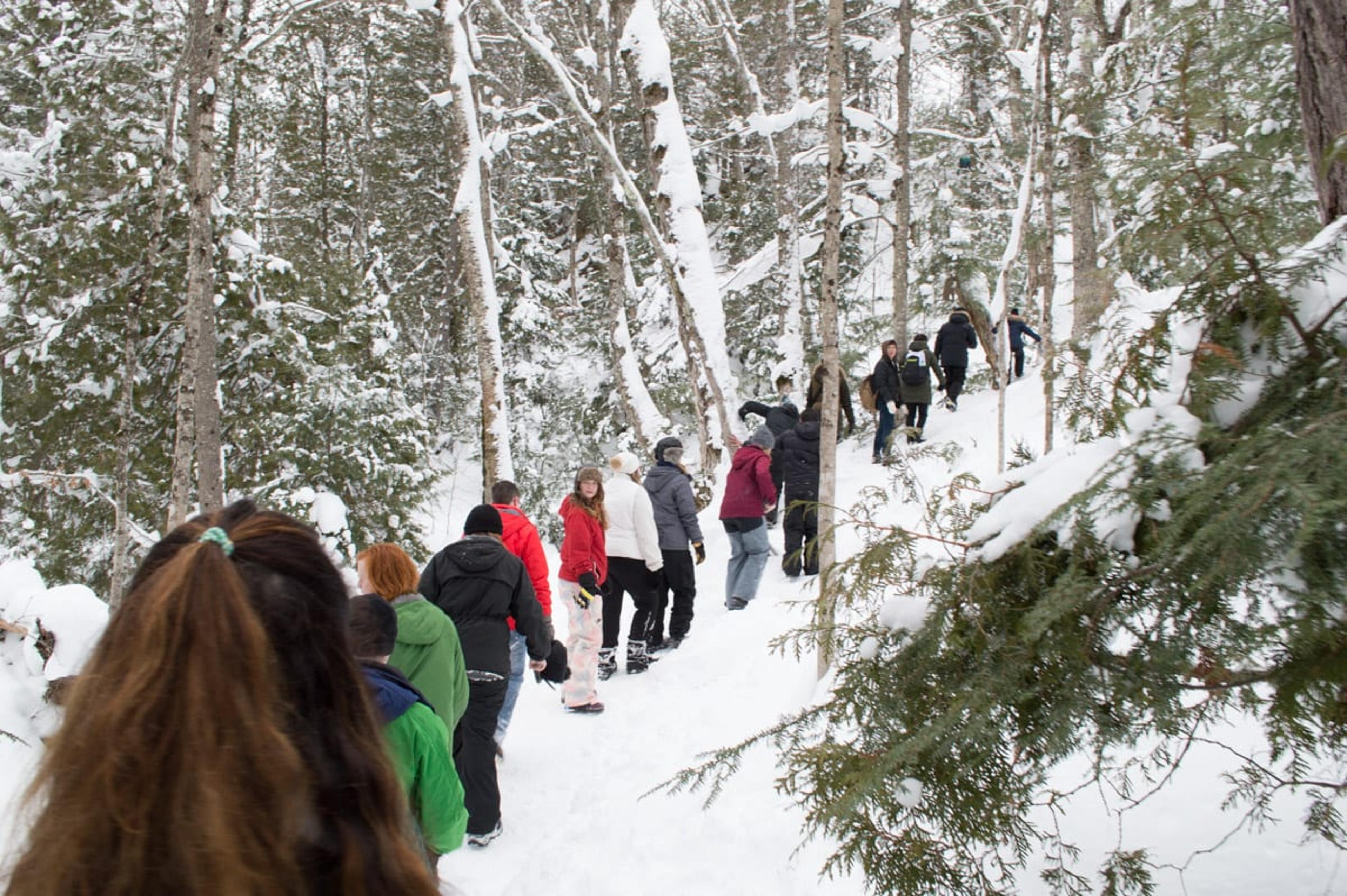
During any winter excursion, it's important to be as prepared as possible. Taking extra safety precautions is key; ice and cold present dangers, and the weather can change quickly.
Here are some winter hiking basics to keep you warm and safe:
- Waterproof boots with cleats: Waterproof boots are a necessity when winter hiking. Ice cleats offer additional traction for the trail and the caves. The insides of the ice caves can be slick, and the cleats may help you stay on your feet if you want to explore them.
- Layer up: Winter in the U.P. can be quite cold, with the average high in January and February reaching about 23 degrees Fahrenheit. But when you’re constantly moving in the cold while well insulated, you can still overheat and sweat, which can make you uncomfortable. Appropriately layering with a sweat-wicking base, warming layers and a wind-resistant outer shell, along with a hat and gloves or mittens, can help you manage both the cold and the activity. A neck gaiter can also help protect your face from wind, and snow pants will keep your legs insulated and dry.
- Hand warmers: Keeping hand warmers in your pockets can serve as a great back-up plan if you start to get cold.
- Snacks and water: In the winter, your body is working overtime to keep you warm, which means you still need to fuel properly and stay hydrated. You could feel fatigued more quickly if you aren’t drinking enough water while hiking, so bring a bottle with you. Your body burns more calories to stay warm in the cold, so throw in few granola bars or pack of energy bites.
- Watch the weather: Check the forecast before you to go to check for winter storms, wind chills and dangerous conditions.
Photo Credit: @odin_athena_gsd and @giffordoutdoors
Related: